


Many people use the same sanitary pad throughout their entire period, regardless of how flow changes from day to day. This often means feeling bulky and uncomfortable on lighter days, while facing a real risk of leaks during heavier ones. Since flow naturally shifts across a cycle, and even across different life stages, choosing the right pad for each stage makes a meaningful difference in both comfort and protection.
1. Why Flow-Based Selection Matters
Menstrual flow is rarely constant. Most cycles follow a pattern of heavier flow in the first few days, tapering off toward lighter spotting near the end, though the exact pattern varies from person to person. Using a single pad type across this entire range means the product is mismatched with actual need for most of the cycle.
On light-flow days, a pad designed for heavy flow can feel thick, warm, and unnecessarily bulky, reducing breathability and overall comfort. On heavy-flow days, a pad designed for light flow simply cannot keep up, increasing the risk of leaks and more frequent changes. Matching absorbency to actual flow is not just about comfort, it directly affects how well the product performs when it matters most.
2. Matching Absorbency to Flow Level
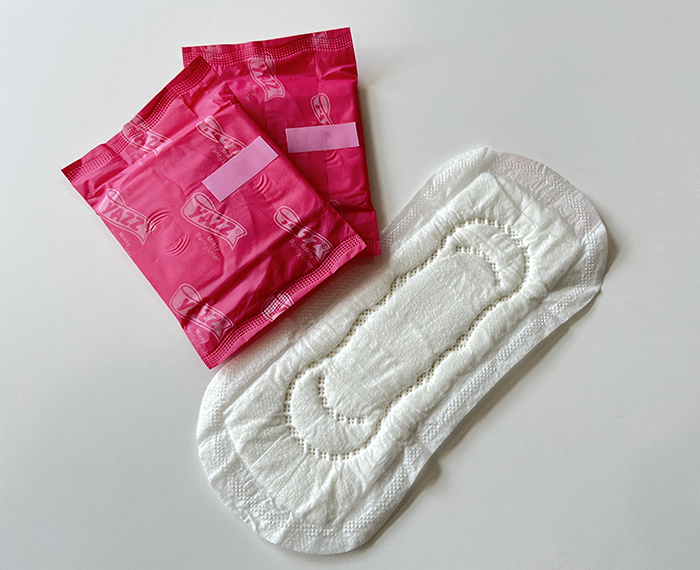
Light flow / panty liners. For spotting or the tail end of a period, a thin liner is usually sufficient. Anything thicker at this stage tends to trap heat and reduce airflow without providing any real benefit in protection.
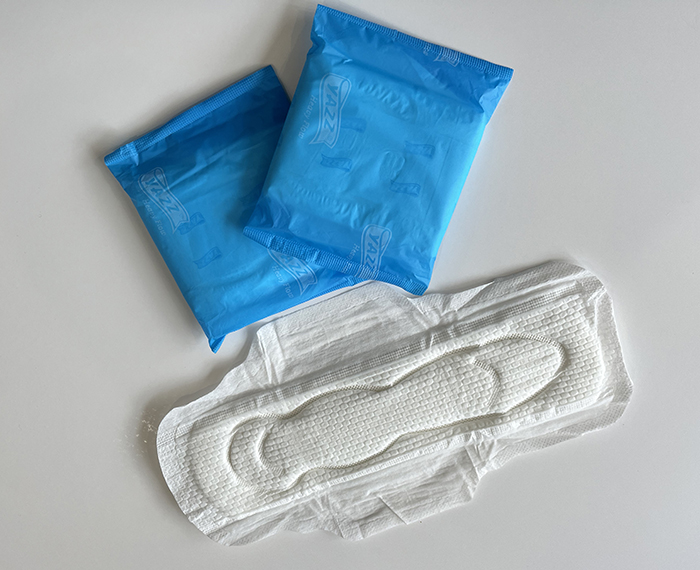
Regular flow / day pads. For the more typical days of a cycle, a standard daytime pad balances absorbency with a closer, more comfortable fit, suitable for extended wear throughout a normal day.
Heavy flow / super pads. During peak flow days, a higher-capacity core combined with a longer, wider design helps reduce how often the pad needs to be changed while maintaining reliable leak protection.
Overnight flow. Lying flat overnight increases the risk of leaking from the back, so overnight pads are typically designed with extended rear coverage and wider wings. This combination supports both higher absorbency and extended wear time without compromising comfort during sleep.
3. Additional Factors Beyond Absorbency
Material and skin sensitivity. The choice between a soft cotton-like top layer and a dry-mesh surface matters most for those with sensitive skin or a tendency toward irritation. Since pads are often worn for extended periods, how breathable and gentle the material feels can be just as important as absorbency itself.
Shape and fit. Design details such as wider wings or a contoured shape affect how well a pad stays in place across different body types and sleeping positions. A better fit reduces the chance of shifting, which is one of the most common causes of side leakage.
Special scenarios — postpartum recovery. Postpartum bleeding, known as lochia, represents another type of high-flow scenario, but one that is different from a regular period. Flow volume is typically heavier and the discharge continues for several weeks, all while the body is in an early stage of physical recovery. Standard sanitary pads, even heavy-flow versions, are often not sufficient for this stage. Maternity pads are specifically designed for postpartum use, offering higher absorbent capacity, a gentler material composition suited to sensitive post-birth skin, and a longer, wider shape built for this specific recovery period.
Ultimately, no single pad is built to handle every stage of a cycle, let alone every stage of life. Matching the product to the actual flow, whether that means switching between liners, day pads, and overnight pads across a typical cycle, or transitioning to maternity pads during postpartum recovery, leads to better comfort and more reliable protection than relying on one product to cover every situation.


